
FREE PATIENT NAVIGATOR SUPPORT
See which glioblastoma clinical trials may be relevant for your situation
If you are wondering whether clinical trials might be an option for you or a loved one, you are not alone. Our patient navigators offer free, no-obligation guidance to help you explore glioblastoma trial options.
New to clinical trials? Start with the basics
· 1,000+ brain tumour patients supported
· Free 15-30 min call in 15+ languages
· Your information is kept private
Wherever you are in your search, a patient navigator can help
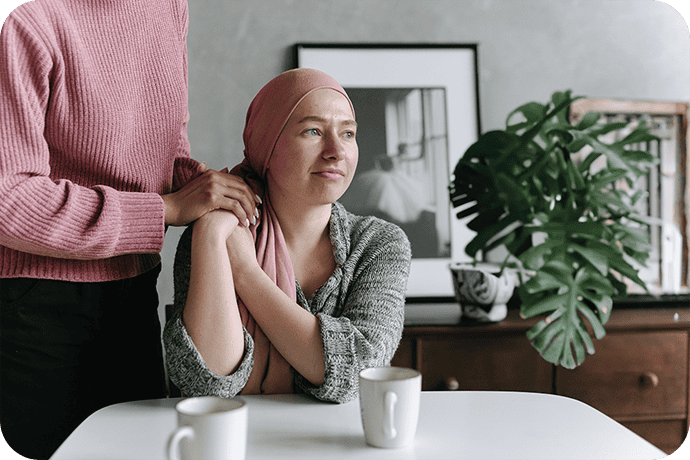
Whether you are looking at a specific trial, facing recurrence or progression, or just starting to explore — a patient navigator can help you find glioblastoma clinical trial options that may be relevant for your situation. We have supported patients and families in the UK and over 135 countries.
A specific glioblastoma trial you're considering
Walk through the details, criteria, and what to ask the trial team. Bring any trial name, ID, or link you've come across
Trials after surgery, radiotherapy, or temozolomide
Including options after temozolomide or other prior treatment. Bring details on what you've had and when
Options after recurrence or progression
For tumours that have come back, grown, or stopped responding to current treatment. A navigator can help you explore what may be open now
Immunotherapy, CAR-T, and other investigational therapies
Including cell therapy, vaccine approaches, poliovirus-based therapies, and new treatment combinations being studied for glioblastoma
Why patients and families work with a navigator
Information about glioblastoma trials is scattered, fast-changing, and often hard to interpret without specialist knowledge. New trials open, others close, and eligibility criteria can shift month to month. With multiple treatment lines and many investigational approaches being studied, even motivated patients and caregivers lose time and miss options trying to figure this out alone.
A navigator does this work full-time. They keep up with the research as it changes, match what is open to your treatment history and current situation, and explain what each option may involve so you can make decisions with clarity instead of guesswork.

Understanding clinical trials for glioblastoma
Clinical trials are research studies that test new treatments to see if they are safe and how well they work. For glioblastoma, trials are looking at new types of treatments such as immunotherapy, CAR-T and other cell therapies, vaccine approaches, poliovirus-based therapies, and new treatment combinations. Others look at ways to slow progression or manage symptoms. These treatments are investigational, which means researchers are still studying them and they are not yet approved as standard treatment.
Why people consider trials
Possible access to investigational treatments not yet available
Regular check-ups and care from the clinical trial team
Contributing to glioblastoma research may help future generations
Important to know: Clinical trials aren't right for everyone, come with risks, and don't guarantee benefit. A call with a navigator can help you understand whether a trial may make sense for your situation and what questions to ask before deciding anything.
How we help
Your personal patient navigator
Our patient navigators are astrocytoma trial experts. They review your previous treatments, scans, pathology and biomarker results, and location to check them against an up-to-date list of astrocytoma trials.
1
Book your call
Fill out a short form and pick a call time. It takes just a few minutes and stays private.
2
Speak to your navigator
During your free 15-30 min call, your navigator listens to your situation, answers your questions around eligibility, and discusses what kinds of astrocytoma trials may be worth exploring further.
3
Explore trials together
After the call, you'll receive a personalized overview of potentially relevant astrocytoma trials. If a trial interests you, a navigator can help with next steps, including connecting with trial sites in the UK or internationally. You stay in control.
Free
15+ languages
No obligation
Independent
Not medical advice
Why brain tumour patients trust myTomorrows
Since 2012, we have supported thousands of patients and caregivers across 135+ countries in navigating rare and serious disease clinical trials — including over 1,000 brain tumour patients. We are independent, which means our navigators provide unbiased support focused on your unique situation.
1,000+
Brain tumour patients and families supported worldwide
135+
Countries
1,000+
Brain tumour patients and families supported worldwide

Supporting patients and families facing a brain tumour is a commitment I hold close to my heart. As your navigator, my purpose is to bring clarity to a complex journey.

Theo Cantero
Patient navigator specializing in neuromuscular diseases
Frequently asked questions (FAQs)
Is this relevant for me or my loved one with glioblastoma?
If you or your loved one has glioblastoma, there may be clinical trial options to explore depending on treatment history, scan results, and molecular markers. Some glioblastoma trials are for people who are newly diagnosed, others for people whose tumour has returned or progressed, and others for people who have completed standard treatment. A short call with a patient navigator can help you understand which options may be relevant for your situation and what may be worth keeping an eye on as new trials open.
How do I know if exploring a clinical trial makes sense right now?
It depends on what feels manageable for you and your family — how you are doing today, how much travel or time you could take on, and whether you want to explore options now or simply stay informed. A patient navigator can help you understand what exploring trial options could involve and prepare questions to discuss with your care team. You can explore options without committing to anything.
What if the tumour has returned, progressed, or treatment is no longer working?
That is one of the most common reasons people start exploring clinical trials. Some astrocytoma trials are designed specifically for people whose tumour has returned, grown, or stopped responding to current treatment. A navigator can help you understand whether there may be options that fit your situation and what questions to ask your care team.
Can I explore glioblastoma trials after surgery, radiotherapy, or chemotherapy?
Yes, in many cases. Some glioblastoma trials are specifically for people who have already had treatment such as surgery, radiotherapy, or chemotherapy, while others are for people who are newly diagnosed. Eligibility often depends on the type of treatment you have had, when you had it, and how the tumour has responded since — the clinical trial team confirms the final details for any specific trial.
What happens if I book a navigator call?
You'll speak with a navigator who will ask a few questions about your diagnosis, treatment history, and current situation, so we can understand what clinical trial options may be relevant. If you have scan or pathology reports, it helps to share them — but you don't need everything ready to start. After the call, we'll explain what options may be a match (if any) and what next steps could look like. We won't contact any clinical trial team without your permission.
Is this a commitment to join a clinical trial?
Booking a call is not a commitment to joining a clinical trial. Many patients and caregivers speak with a patient navigator simply to understand what options may exist and what joining a trial could involve. After the call, you can decide what (if anything) you want to do next, including just staying informed.
What if I am not eligible for a glioblastoma clinical trial?
That can happen and it's common. Glioblastoma trials often have specific requirements related to previous treatments, scan results, molecular markers, general health, or other medical details. If you are not eligible right now, your navigator can explain why, help you understand what to watch for, and keep you informed as new trials open or criteria change.
Do I need scan results or pathology reports to explore glioblastoma clinical trials?
Not necessarily, but they are often helpful, because many glioblastoma trials have specific criteria related to molecular markers and treatment history. If you already have those documents, you can share them during or after the call. If you don't, your patient navigator can explain what information may be useful and what to ask your care team to gather. We'll only share information with a clinical trial team if you ask us to.
Will we need to travel for a glioblastoma clinical trial?
Sometimes, yes. Many glioblastoma trials take place at specialist hospitals, and joining a trial may require in-person visits for scans, tests, or treatment. How much travel is needed depends on the specific trial. Some have sites in multiple regions, while others are only available in a few locations. If you're interested in a specific option, the clinical trial team can confirm practical details, including any travel support.
Is there any cost to speak with a patient navigator?
No, there’s no cost to speak with a myTomorrows patient navigator. The call is for information and guidance, so you can understand what clinical trial options may be relevant and what next steps could look like. You can decide what (if anything) you want to do after the call.
Will my information be kept private?
Yes. We handle any medical information you share securely and use it only to assess whether clinical trial options may be relevant. We will not share your information with any clinical trial team or hospital without your clear permission.
More on clinical trials
What is a clinical trial?
A clinical trial is a research study that tests a new treatment or approach to see how safe it is and how well it works for a medical condition. Clinical trials follow strict rules and are reviewed by independent ethics committees to help protect participants. What's involved can vary by trial, including clinic visits, scans, and how the treatment is given. Joining a clinical trial is always voluntary.
Why do people consider clinical trials for glioblastoma?
People consider glioblastoma clinical trials for different reasons. Often, they want to learn about new treatment approaches — especially when current treatment options feel limited or aren't working as hoped. Others value the regular check-ups and specialist follow-up that can come with joining a trial, or want to support research that may help others in the future. A navigator can help you understand what trial options may be relevant, so you can discuss options with your care team.
Are glioblastoma clinical trials safe?
Glioblastoma clinical trials follow strict safety rules, but there can still be risks and side effects. Before someone can join a trial, the clinical trial team reviews medical information to check whether the trial is appropriate, and participants are monitored closely through regular visits and tests during the trial. Trials are also reviewed by independent ethics committees to help protect participants. Joining a clinical trial is always your choice, and you can stop at any time.
Show less
Show more
Talk to a patient navigator
Fill out this short form to book your free call. You'll pick your time and language on the next page.
What to expect:
A free 15-30 min call with a navigator who specializes in brain tumour trials
Review of your diagnosis and treatment history
A clear plan for finding brain tumour trials that may match
No obligation. Your information is never shared without your permission



mytomorrows.com is published by Impatients N.V., Anthony Fokkerweg 61, 1059 CP, Amsterdam, The Netherlands. VAT: NL 8516 3386 9B01, Chamber of Commerce: 55272169
© 2026 myTomorrows. All rights reserved.
Privacy statementTerms of use
