Glioblastoma Clinical Trial Eligibility: What Patients and Caregivers Should Know
Theo Cantero 29 Jun 2026
share this post
Theo Cantero 29 Jun 2026
share this post
For people living with glioblastoma (GBM), clinical trials can provide access to new therapies and care options beyond standard treatment. A common first question is: “Am I eligible for a clinical trial?”
Eligibility depends on factors such as your diagnosis, treatment history, recent MRI findings, overall health, steroid use, and sometimes tumour molecular markers like MGMT or IDH status — specific features in the tumour, found through tissue testing, that can help guide diagnosis, prognosis, and sometimes treatment and trial options. Because every trial has its own set of requirements, not qualifying for one study does not mean you won’t qualify for another.
This article walks through the main factors that affect glioblastoma trial eligibility, from diagnosis and prior treatment to MRI findings, steroid use, and molecular markers. It also explains what your options may be if you don’t qualify for a particular trial. The aim is to help you feel more prepared for conversations with your care team and clearer about what taking part could realistically involve.
A clinical trial team — which may include neuro-oncologists, research coordinators, and trial investigators — reviews your medical history against the trial’s inclusion and exclusion criteria. Inclusion criteria are what a person must have to join a trial (such as a confirmed diagnosis); exclusion criteria are factors that would prevent someone from safely taking part. The team typically reviews:
Many trials also use a performance status scale, such as the Karnofsky Performance Status (KPS), which measures how well someone can carry out daily activities. Importantly, eligibility is not a judgment about whether someone is “healthy enough” — it is about matching the right patient to the right clinical trial based on scientific and safety requirements.
Eligibility for any cancer clinical trial generally comes down to matching a person’s diagnosis, overall health, and prior treatment to each study’s specific rules — and glioblastoma trials follow these same principles, while also weighing factors specific to brain tumours. Common GBM criteria include a confirmed diagnosis, age, prior treatment history, overall health and neurological function, MRI results, steroid use, tumour tissue availability, and sometimes tumour molecular markers such as MGMT or IDH status.
Yes. Most glioblastoma clinical trials require a confirmed diagnosis from pathology testing (a biopsy or surgery), which helps the study team confirm the tumour type and make sure the trial is appropriate. Trials may be designed for newly diagnosed or recurrent glioblastoma, or a specific stage of disease — an important distinction, because they often have different goals, treatments, and eligibility rules.
Yes, they’re one of the most important factors. Some trials are for people who have completed standard treatment (surgery, radiation, and temozolomide); others are for newly diagnosed patients who haven’t started treatment beyond surgery or biopsy. For recurrent GBM trials, eligibility may depend on how many prior therapies you’ve had, whether you’ve had radiation, bevacizumab, or immunotherapy, how much time has passed since your last treatment, and whether you’ve recovered from earlier side effects.
Yes. Many trials are specifically designed for recurrent GBM, meaning the tumour returns or keeps growing after treatment. Recurrent glioblastoma is an important area of clinical research because standard treatment options are more often limited when the disease comes back. These trials may explore:
Eligibility often depends on whether recurrence is confirmed on MRI, time since radiation or chemotherapy, prior treatments, overall health, and tumour molecular features. Some trials require enrollment within a specific window, so if the tumour has returned, it helps to explore options early — before starting the next treatment — since some trials don’t allow certain prior therapies.
Usually, yes. Many GBM trials are open to adults 18 and older, with pediatric brain tumour studies offered separately. Some studies have upper age limits or extra requirements for older adults. Age alone doesn’t decide eligibility, though — teams also weigh overall health, daily functioning, lab results, and visit requirements.
Yes. Teams assess whether you’re well enough to take part safely, reviewing things like blood counts, liver and kidney function, infections, neurological symptoms, seizure control, and medication use. This matters especially in GBM because the disease and its treatments can affect mobility, speech, cognition, and immune function. Performance is often measured by the Karnofsky Performance Status; some trials require a KPS of 60 or 70, though the exact threshold varies by study.
Sometimes. Many people with glioblastoma take corticosteroids such as dexamethasone to reduce swelling in the brain and help manage symptoms. Because steroids can affect the immune system, some trials — especially immunotherapy trials— require steroid use to be below a certain dose, stable, or not increasing before enrollment. Taking steroids doesn’t automatically exclude someone, but it can affect whether a particular trial fits.
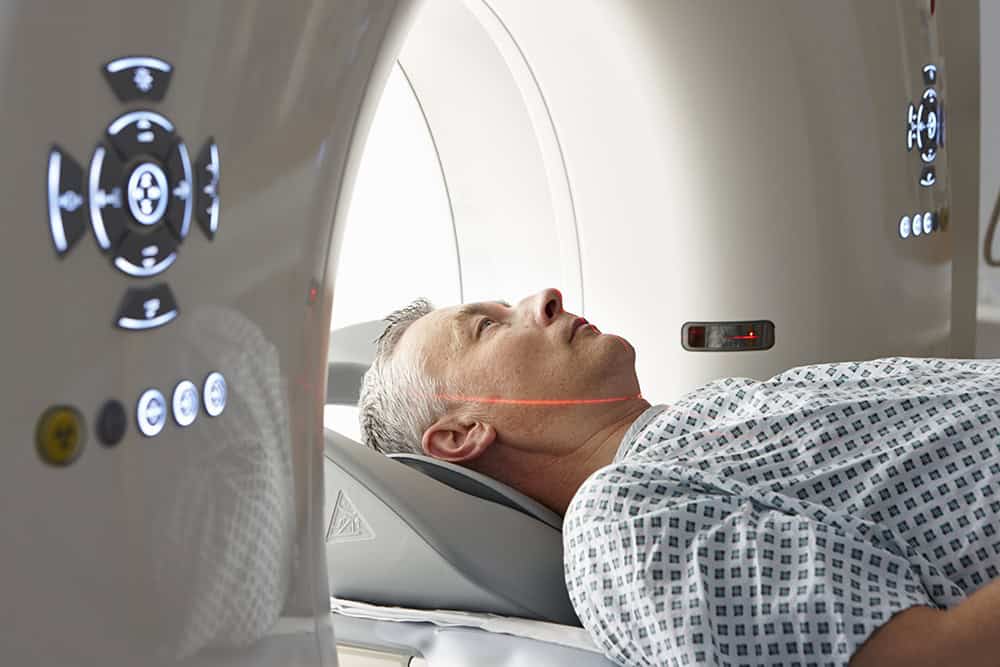
Yes, in most cases. A recent MRI helps confirm whether the disease is newly diagnosed, stable, progressing, or recurrent. Some recurrent GBM trials require more than one scan to confirm progression, and many specify how recent the MRI must be, or which imaging sequences are needed — often within a defined screening window before enrollment.
Sometimes. Certain trials require tumour tissue from a previous biopsy or surgery to confirm the diagnosis or test for molecular features. This is especially common in biomarker-driven studies; in some cases, a local pathology report isn’t enough, and tissue must be reviewed by a central study laboratory.
It depends on the clinical trial as some glioblastoma trials are only open to patients whose tumours have specific molecular features, while others don’t require a particular biomarker. As research becomes more targeted, biomarker-based eligibility is increasingly important. Glioblastoma is now understood as a disease with different molecular profiles and tumour features that can influence prognosis, treatment planning, and clinical trial eligibility. Biomarkers or tumour features that may affect eligibility include:
For example, some studies enroll patients with MGMT-unmethylated newly diagnosed GBM, while others target features such as EGFRvIII. A person with GBM may also qualify for a broader brain tumour or solid tumour study if it allows glioblastoma and the tumour has the required feature. Not every trial requires a biomarker, but having molecular results available helps your care team find the best biological fit. So, if testing hasn’t been discussed, it may be worth asking whether your tumour has been profiled.
You don’t have to work it out alone. A myTomorrows patient navigator can review your diagnosis, treatment history, MRI results, and any molecular testing to help identify glioblastoma trials that may be relevant — and explain what taking part would actually involve.
Not qualifying for one glioblastoma trial doesn’t mean there are no options. Common reasons someone may not qualify include:
You may still qualify for a different trial at the same or another center, and eligibility can change over time as new studies open, symptoms improve, steroid doses change, or molecular results come in. Other options include standard-of-care treatment, supportive or observational studies, future trials, or, in some situations, expanded access (compassionate use). Expanded access may be considered when someone has a serious condition, no suitable approved treatment or trial option, and the benefits and risks can be reviewed by the treating physician, sponsor, and relevant oversight bodies.
Start by reviewing your diagnosis, treatment history, MRI results, current health, steroid use, and any molecular testing with your care team. New glioblastoma trials open regularly — including studies for both newly diagnosed and recurrent diseases, and trials testing immunotherapies, targeted therapies, and biomarker-driven approaches — so options can change over time. Because the landscape moves quickly, checking current options is the best way to find trials that are actively enrolling.
But eligibility is only part of the decision — patients and families also need to weigh what participation involves (visit schedule, travel, testing, costs, and time away from work or caregiving) and how a trial fits the person’s current health and treatment plan.
You don’t have to navigate this alone. Care teams, trial sites, advocacy groups, and patient navigators can help identify options, explain requirements in plain language, and support decisions based on both medical fit and real-life feasibility.
Eligibility can feel complicated, but you don’t have to navigate it by yourself. Speaking with a patient navigator is a simple first step — they can help you understand which trials may be relevant to your diagnosis, what eligibility requirements mean in plain language, and what participation could look like for you and your family.
myTomorrows has already supported more than 1,000 brain tumour patients in navigating their clinical trial options.
Patient navigator at myTomorrows
Theodor Cantero is a patient navigator at myTomorrows, where he supports patients globally in navigating and accessing clinical trials. Medically trained as a nurse in London, Theo brings hands-on clinical experience alongside a strong understanding of patient care pathways. He specialises in clinical trial recruitment across oncology, neurology, cardiovascular, and rare and chronic diseases, helping match patients to potential treatment options beyond standard care.
Theo holds a BSc in Nursing from London South Bank University and an MSc in Economic Evaluation in Healthcare from City St George’s, University of London, combining clinical expertise with a data-driven perspective on healthcare access.
Theo Cantero 29 Jun 2026

Laura Haggqvist
28 Aug 2026
15 mins read

Dennis Akkaya
21 Aug 2026
12 mins read


Madeleine Pagel
14 Aug 2026
14 mins read


Andrea Enguita
3 Aug 2026
18 mins read

Adrianne Rivard
14 Jul 2026
8 mins read

myTomorrows Team
26 May 2026
4 mins read

Dennis Akkaya
26 May 2026
8 mins read

Andrea Enguita
20 May 2026
13 mins read

Andrea Enguita
19 May 2026
37 mins read

Andrea Enguita
20 Apr 2026
12 mins read
